
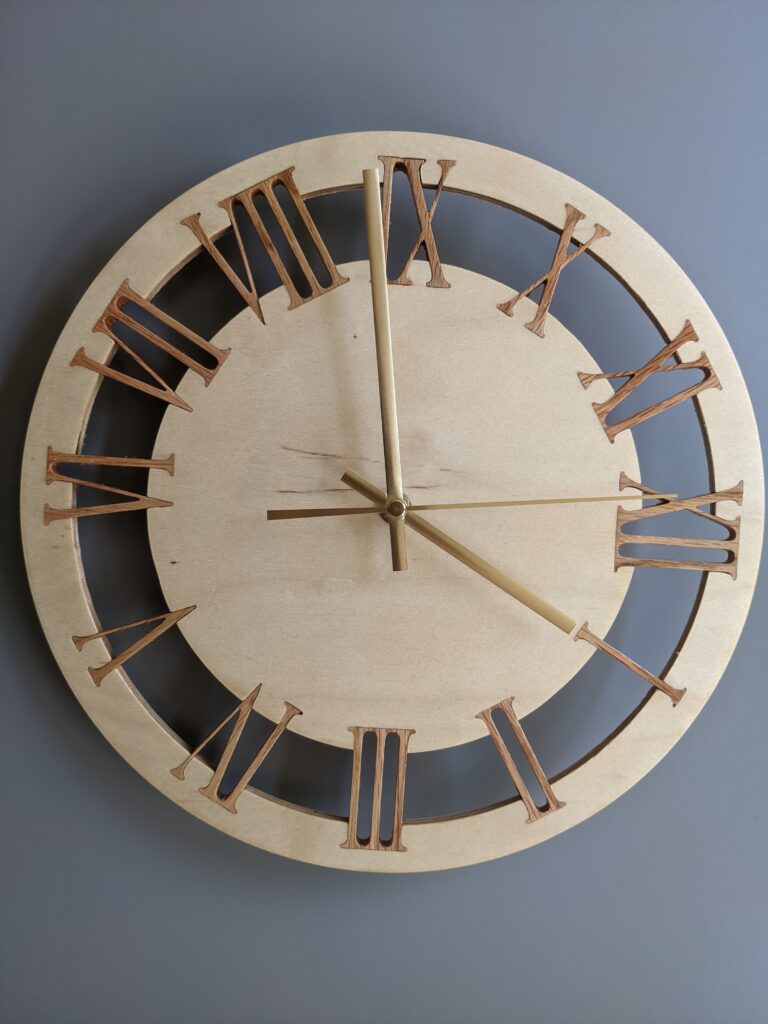
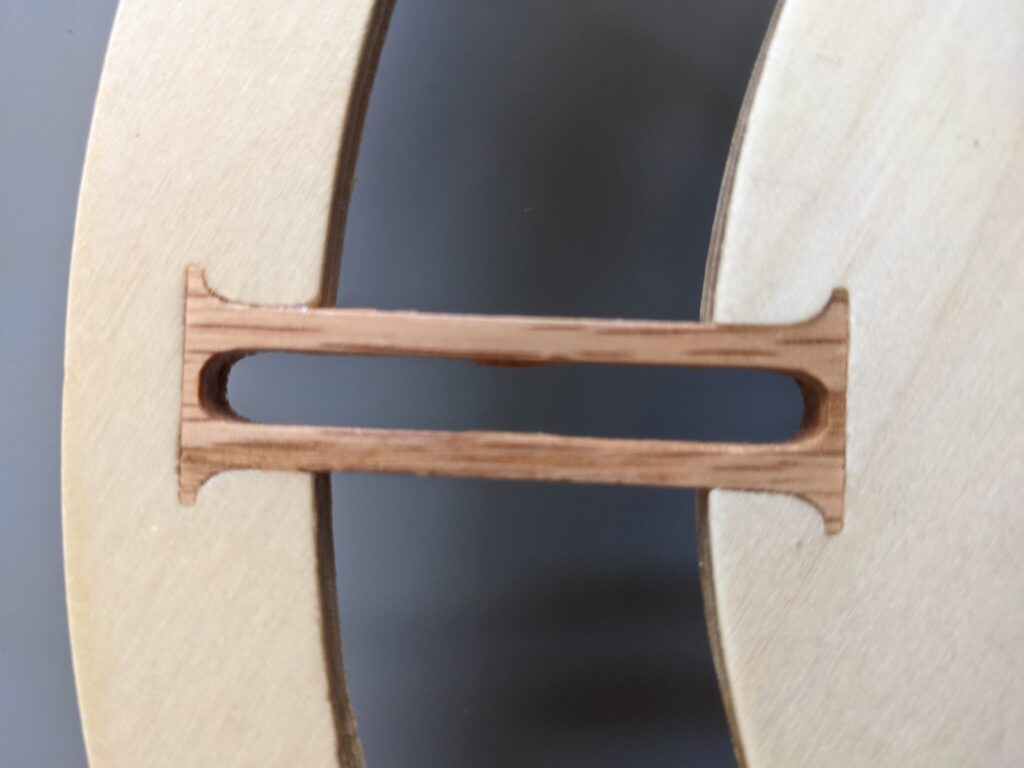
I saw something similar a while ago that was made, I’m guessing, from pressed steel where the circular ring on the line of the roman numerals had been punched out. My initial plan was to create the inner and outer parts of the clock and to glue the numerals to them but then realised I could use the shape of the numbers to tie the two parts together.
The relatively easy part was to cut the profiles out of the 6mm birch ply – this was done using a 2.3mm down cut bit and gentle depth of cut of around 0.8mm. I bought the bit from Router Cutter – they seemed to be the only UK source for such a small bit on a 6mm shaft.
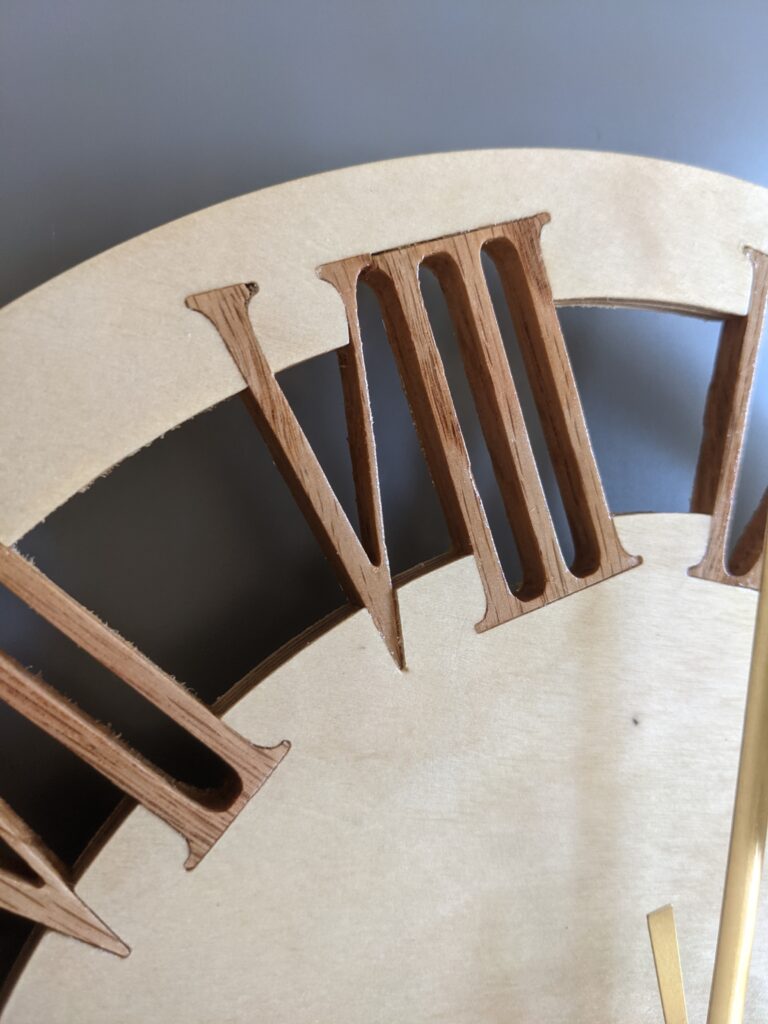
Forming the roman numerals was going to be a touch more difficult – to form some of the acute angles within the ‘V’ for example and a 2.3mm bit would form too much of a radius. I ended up getting a set of 1mm end mills off Amazon and at just over a quid per bit I wasn’t expecting too much from them. After using them on this project and for cutting cogs for a spirograph project I’ve still got 8, one I snapped working out how they would perform and one I dropped on the floor and for the life of me I can’t find where it rolled to!
Anyway, this is the 1mm cutting through some 6mm oak that was originally an infill panel to some disused kitchen doors
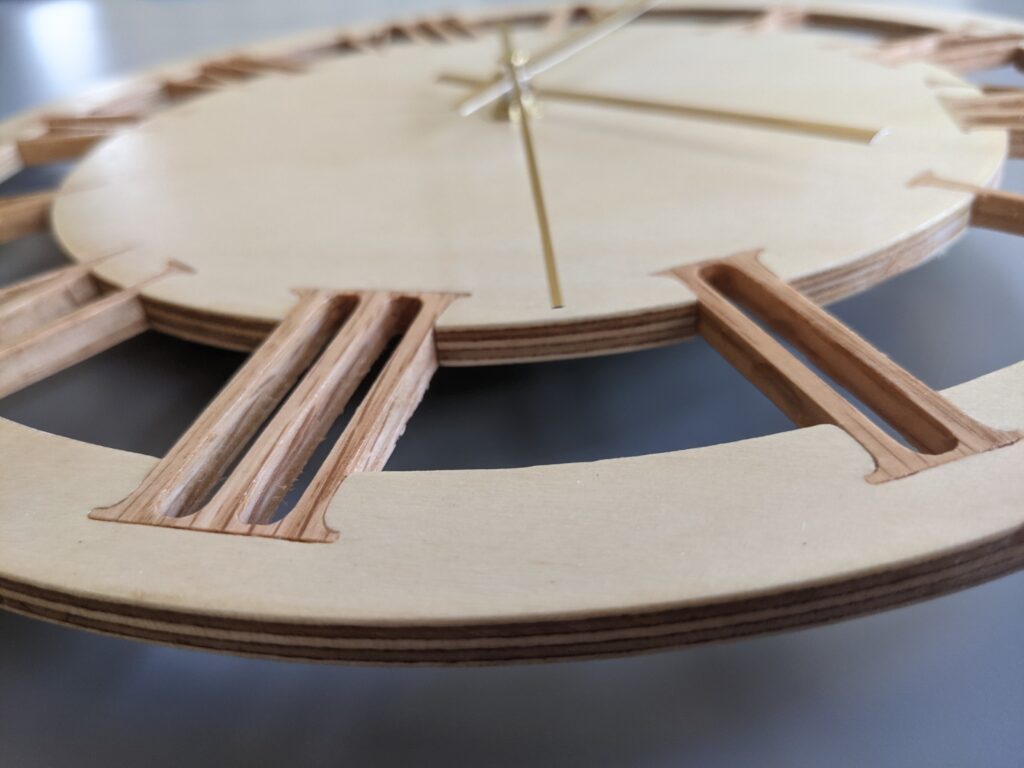
Fitting up went reasonably well after all the parts were given a sanding to remove fuzzies. Indeed I think the engineering term is an interference fit with the numbers fitting in to the ply surround with some gentle persuasion. The result is a clock that has not been glued, but I’m guessing that the several coats of finish have probably acted as an adhesive.
This roman numeral clock is currently on sale on Etsy.